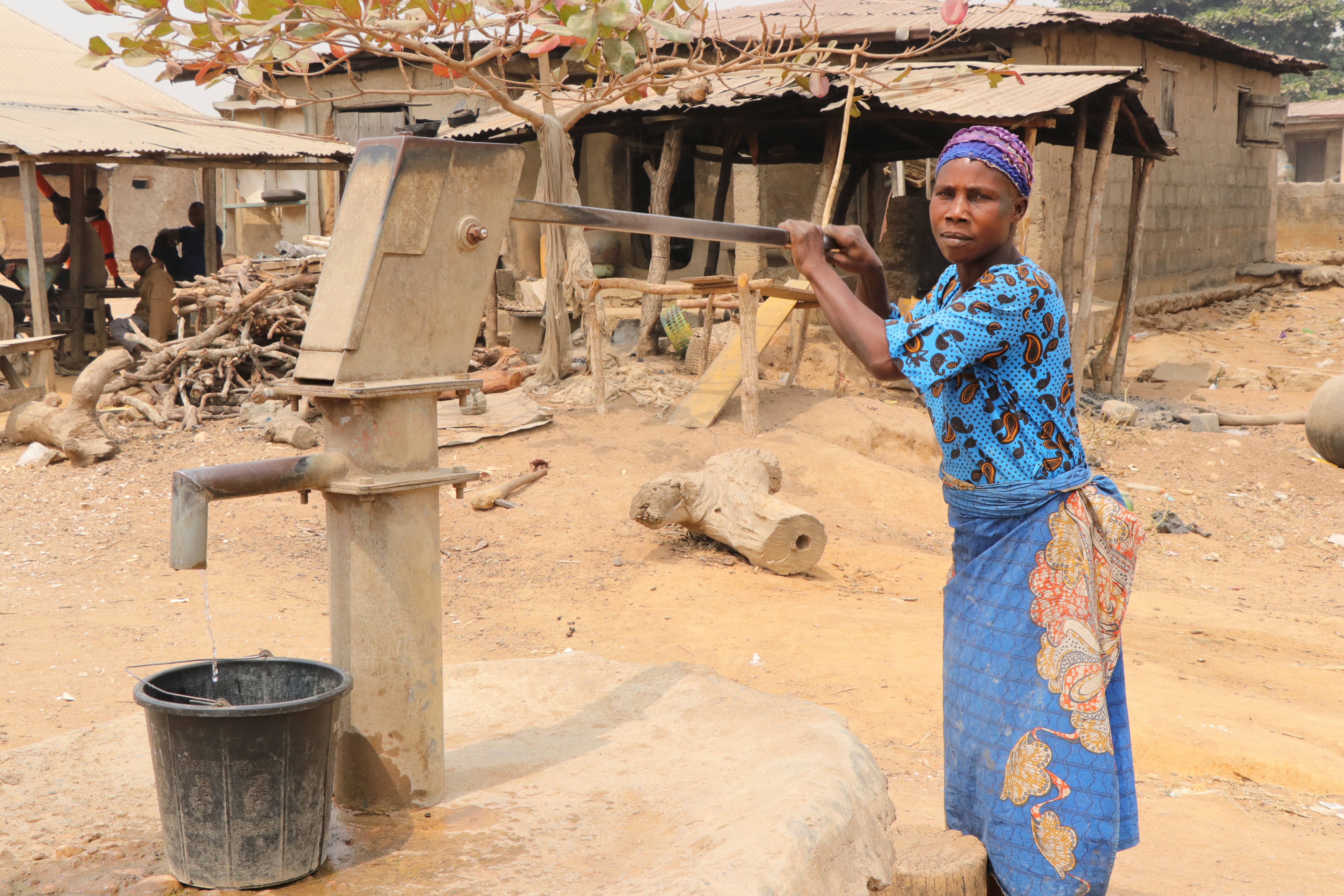
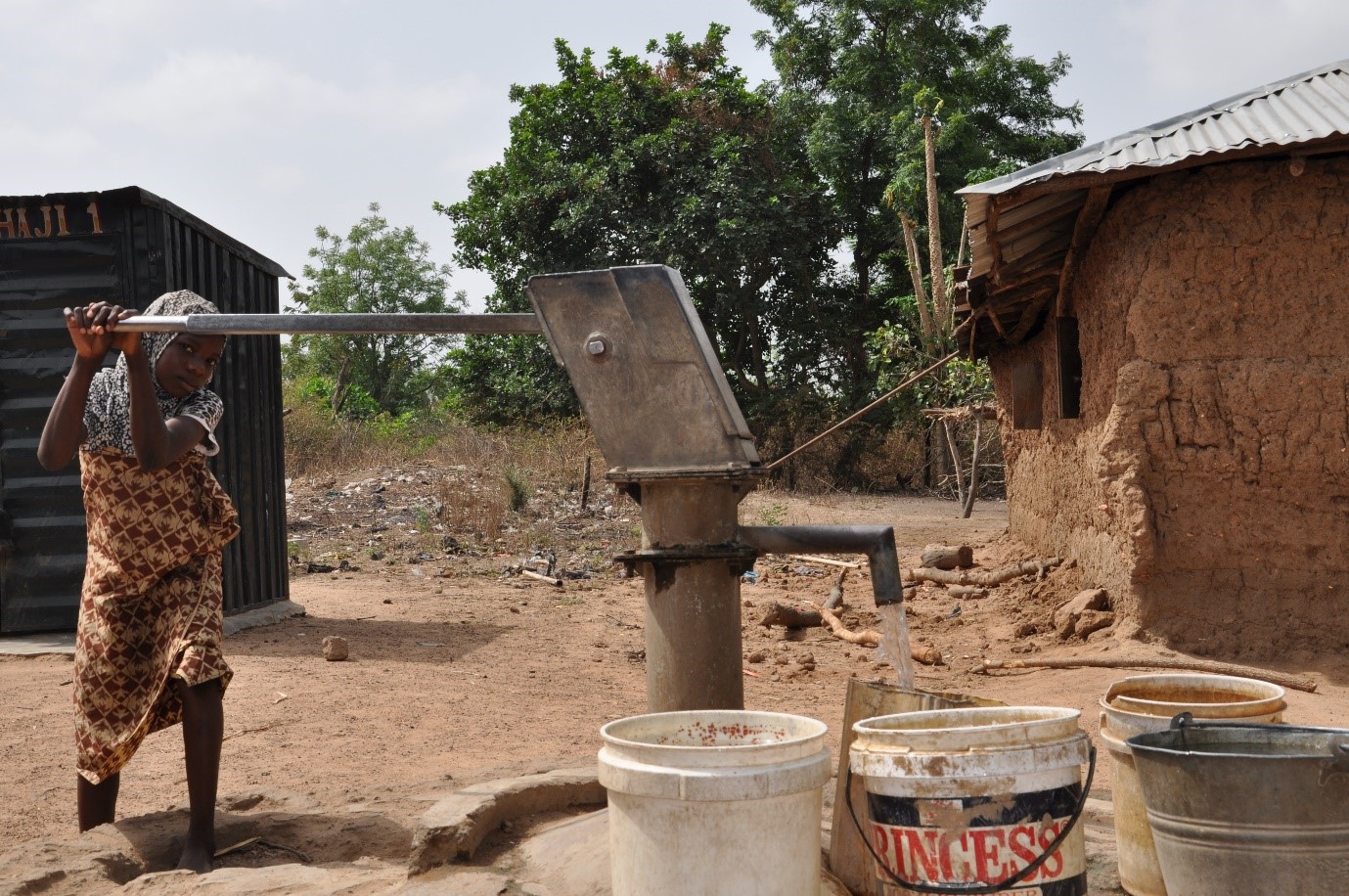
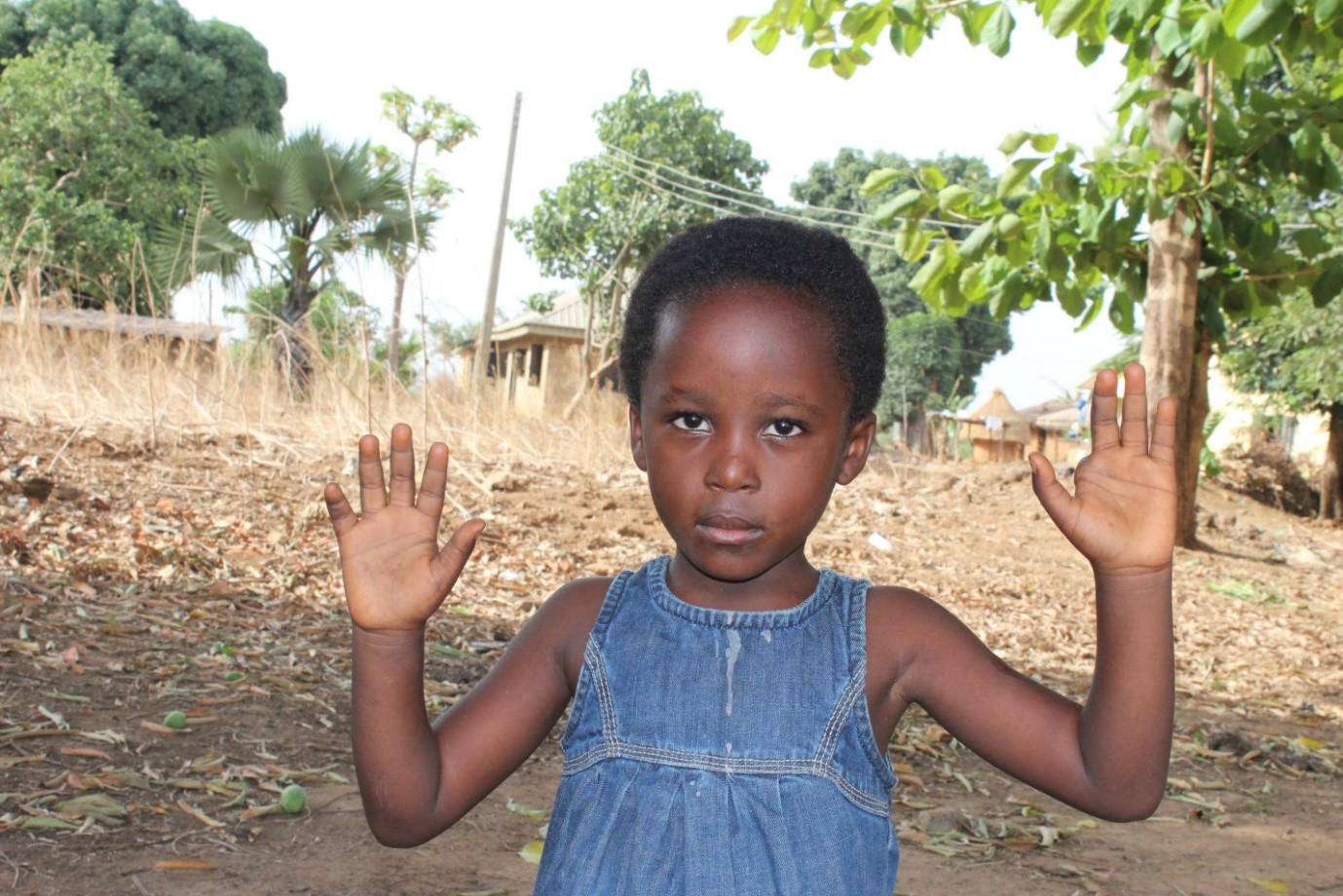
Just before dawn, as early as 4 am, children, and women of Aku community make haste to the dust-feasted brook to scoop the surface of the water before the base is unsettled by cows. Water is life in every sense of it in Aku. It determined when children go to school and when mothers make the meal. It affected livelihood, caused diseases and one reported death of a woman due to snake bite on the way to the rocky-mud stream.
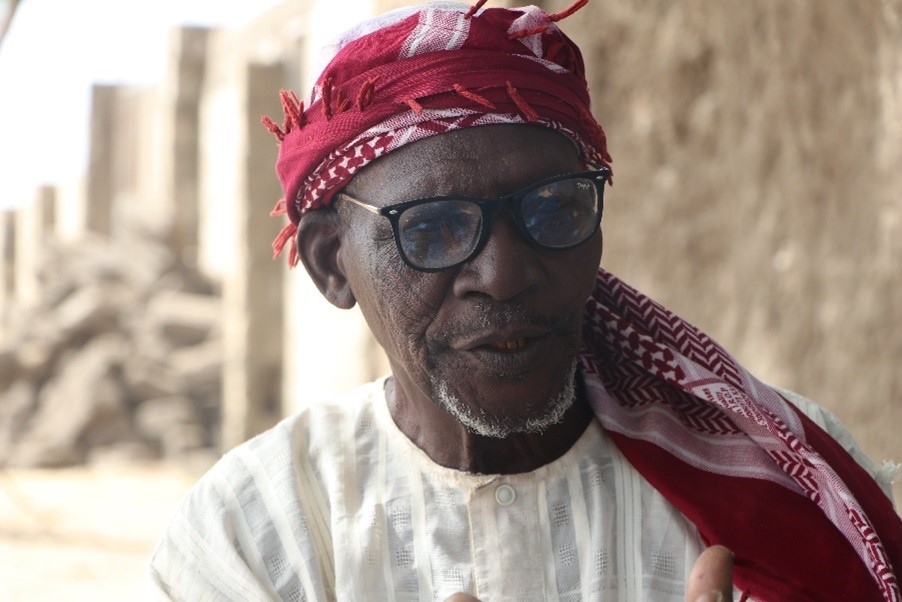
ActionAid provided the first humanitarian intervention by any aid organisation in the community. This means a lot to Jimoh Alabi, 48 who narrated how the ActionAid attuned the community to a world of possibilities. “We never knew that we could mobilise ourselves to make demands from the government, we thought government was very far away but through the sensitisation by ActionAid our eyes have opened” Alabi affirms confidently.
“When ActionAid came, we made a list of what we were lacking in the community (in teasing out right denial issues); we listed the bad water situation, light (electricity), livelihood support for women, health centre, school and support for our farmers. ActionAid decided to provide a borehole because it was the priority on the list, while using a service modelling approach. After sinking the borehole, they told us that they will build our capacity so that we can be able to advocate for other needs of the community,” he said.
Alabi tickles his fingers restlessly as he excitedly nudges to mention the outcomes of the advocacy training: “We were trained on how to mobilise ourselves and write the government. After the training, we decided to practise what we learnt, we went to the Ministry of Water Resources with some of the community people, we told them that we needed water, and we kept going back to make this same demand until they sent some people to our community to assess the need. The government sunk the new motorized borehole. So, we now have one borehole from ActionAid and another one from the government” he enthused.
The community is now empowered to engage the government, began to advocate for replacement of the community’s electricity transformer. It took 4years of relentless advocacy visits to relevant government offices for the transformer to be released. “If not for the knowledge we acquired from ActionAid, we would have given up, we won’t even bother to make any attempt” said Alabi.
Hakimawa is an agrarian community. It is a community in slow transition to modern times. Like many communities, the houses are muddy, the children run around the heap of sandy surrounding with no clothes on. In Hakimawa, the people live, just to survive the next day.
Sprawling in population but stunted in progress, Hakimawa grew from 47 household in the early 1990s to 199 households at the moment. The headcount of adults above 18 are 510; the children are more in number: “children could be more because an average household have about 11 children” Hakimi Salihu Hakimawa, the Village head struggled to recount.
This community is lacking in every basic infrastructure, it has no health facility; the women give birth at home and the sick are treated with local herbs. It had no school until ActionAid built the only primary school in the community.
“When they (ActionAid and ASURPI team) visited us, we thought they were from the government, we were so happy because government people don’t come to our community, we see them just once or twice every four years. They (ActionAid and ASURPI team) asked us what our priority need is, we told them we need everything because there was nothing- no water, no electricity, no school, and no health centre but after discussing with my people, we decided to ask for education, we told them to build a school so that our children can get education. If we get education, we can get every other thing” the Village head said.
In 2010 ActionAid built the first school in the community. The excitement of having its first educational facility was ecstatic; the Village head instructed each household to send their children to school. The following day of the school opening; 107 pupils turned out. The pupils outnumbered the size of the school and the volunteer teachers at the time but they were glad they had a school to attend.
“When we saw that the population of the school is growing so much and there were not enough teachers who were qualified, we went to the government, we visited the Education Secretary, he promised to send teachers to the school and he did what he promised, he sent 8 teachers. We are only waiting for the government to add more schools to what ActionAid has already done” said the Village head.
Helping Gunguntagwaye access quality health care
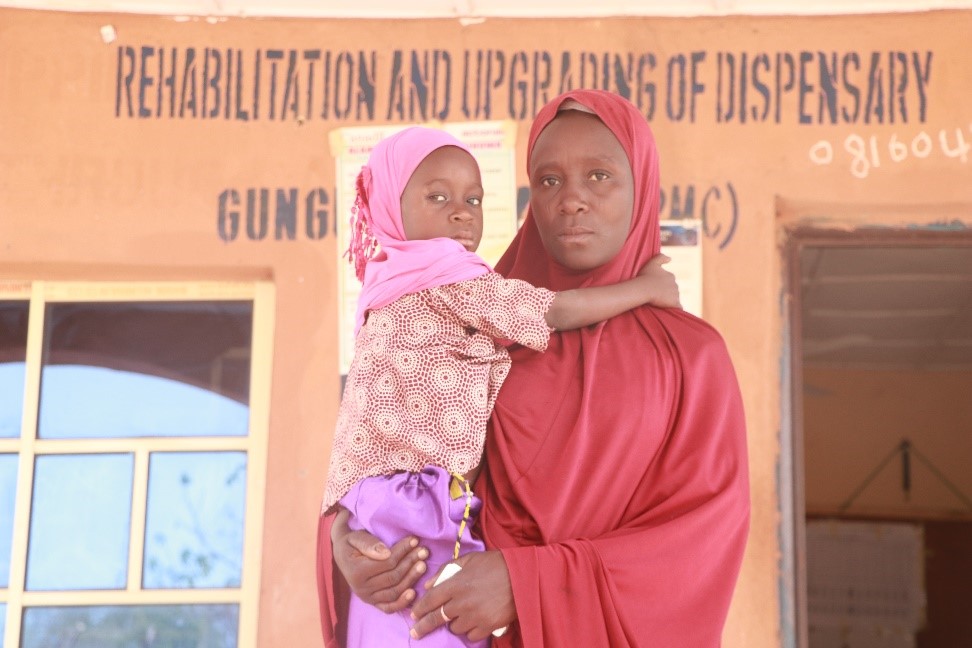
Sajida Bashiru, 4 lay weak on the floor; her mother Amina, rested the child on the floor just to adjust her dropping wrapper. Sajida was rushed to the health centre on a motorbike; “she has malaria” Amina whispered to the waiting arms of the nurse on duty, they both hurried into an open office. In less than 15minutes Sajida walked out of the room with Amina wearing a wide smile.
“People can die of simple malaria if they don’t have a clinic to attend” said Karima Aliyu. Karima is the women leader of Gungun Tagwaye Community.
“Women have really suffered during pregnancy because of the lack of good health centre in the community, the former place we used as health centre was very small and people are not always going there because you cannot get medicine and sometimes nobody to attend to you” Karima recall how the community lost a pregnant mother and child from stress of travelling to a neighbouring community: “I remember we lost a woman and her unborn child because they have to travel on bad road to the nearby hospital to deliver her baby, the baby and the mother died” she sadly recounts.
The government replaced the old rusty mud health centre built by the community to a better structure but abandoned it after commissioning. The structure was unused because of lack of personnel and medication. In 2013 after request from the community, ActionAid renovated the structure, equipped the facility and also empowered community members with advocacy skills to get government attention.
“After ActionAid did the renovation of the Clinic, they also bought beds and provided medicine, then they enlightened us that we can use advocacy to bring government into our community, we decided to write and visit the General Hospital, we requested for more nurses especially female nurses which they gave us five female nurses” the women leader said through an interpreter.
Women in Gidan Agoda community had their role clearly spelt – Take care of the needs of their spouses, fetch firewood, make the meal, and give birth to more children. The husbands, mostly peasant farmers and petty traders were the sole providers for the household. This has continued as a tradition, leaving women as absolute dependent. The consequences are obvious; women become victims of domestic violence, social disconnection, and economic exclusion.
Wasila Hamisu, 29 recall times when women in the community rarely contribute to the economy or the leadership of the community: “Before ActionAid and ASURPI came into our community, women were left behind, we were not trading, we were not doing any business, the men beat their wives, women were not regarded much, some people think women are not suppose to have education, we were just good as house wives” Wasila recalled.
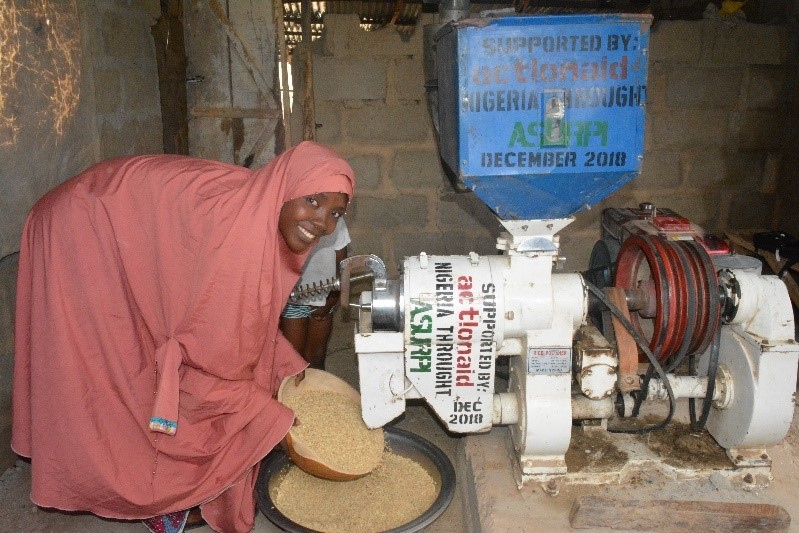
Today in Gidan Agoda, women are participants and contributors to the economy of their households and the community. “When ActionAid and ASURPI came to our community, they asked us (the women group) what we want, we told them we want to be empowered with skills so that we can farm rice” Wasila affirmed the wish was granted: “we were given milling machine”.
The women were formed into a registered cooperative and linked to the Small Medium Enterprises Development Agency of Nigeria (SMEDAN). The 50 women members of the group were trained on improving their agricultural yield and sustaining their business, they were then supported with the sum of 3 Million Naira as interest free loan of 24months for which only 70 percent was required to be paid.
The cooperative is making profits and increasing their outputs. It has increased rice production by about 60 percent, making about 30 percent in profit.
The increased economic activities of the women restored their self confidence and improved their relationships with their spouses. “Before I couldn’t look at people’s face when talking to them, I can’t interact well but now I can talk freely in public and express my mind. I never believed that in my entire life I will ever be able to travel by air and sleep in good hotel but I enjoyed all these because of ActionAid” Wasila said in an emotionally laden voice.
Sajida Bashiru, 4 lay weak on the floor; her mother Amina, rested the child on the floor just to adjust her dropping wrapper. Sajida was rushed to the health centre on a motorbike; “she has malaria” Amina whispered to the waiting arms of the nurse on duty, they both hurried into an open office. In less than 15minutes Sajida walked out of the room with Amina wearing a wide smile.
“People can die of simple malaria if they don’t have a clinic to attend” said Karima Aliyu. Karima is the women leader of Gungun Tagwaye Community.
“Women have really suffered during pregnancy because of the lack of good health centre in the community, the former place we used as health centre was very small and people are not always going there because you cannot get medicine and sometimes nobody to attend to you” Karima recall how the community lost a pregnant mother and child from stress of travelling to a neighbouring community: “I remember we lost a woman and her unborn child because they have to travel on bad road to the nearby hospital to deliver her baby, the baby and the mother died” she sadly recounts.
The government replaced the old rusty mud health centre built by the community to a better structure but abandoned it after commissioning. The structure was unused because of lack of personnel and medication. In 2013 after request from the community, ActionAid renovated the structure, equipped the facility and also empowered community members with advocacy skills to get government attention.
“After ActionAid did the renovation of the Clinic, they also bought beds and provided medicine, then they enlightened us that we can use advocacy to bring government into our community, we decided to write and visit the General Hospital, we requested for more nurses especially female nurses which they gave us five female nurses” the women leader said through an interpreter.
Sabongari Dinkiri is a small but fast growing community in Kebbi State; the houses are muddy and far-flung from the other. It is predominantly a farming community of an estimated 900 inhabitants.
It is Tuesday, 10:15am; a school day and time, but children are seen cladding unto plastic plates, briskly walking in groups. “It is worse than this before” said Umar Muhammed when asked why some children were not seen in school.
“Before 2009, you will not find too many girls attending school because we don’t see the need for it. The boys can be enrolled into school while the girls follow their parents to the farm, they fetch firewood, take food to their parents in the farm and do house chores” Umar explained, noting that: “Dinkiri community has been in existence for more than 100 years; no girl has ever proceeded to Secondary School” he said.
Habiba Umar, Muhammed’s daughter grew up thinking that schooling was not a necessity; she loves to go to the farms in company of other girls of her age. At the farms they pick up residue of harvested crops and go home to help their mothers with house chore. This was a daily routine.
“In 2019, ActionAid and ASURPI came to our community with plenty school materials, they brought school sanders, books, bags and other writing material, they even gave our women 5,000 Naira each so that they can trade and to support our girls in school. This greatly motivated us to begin to take our girls to school. Before ActionAid coming into our community, girls don’t go to school in our community” Muhammed asserts.
Motivated by the gifts of school materials, Habiba and other 8 girls began to attend school more regularly. The new school clothes and sanders was a big motivator. “I was very happy when I received the gifts from ActionAid; it makes me look forward to attending school every day” Habiba said.
Habiba is excited that she will be advancing from Junior Secondary School to Senior Secondary School. “We don’t have so many girls completing Junior Secondary School, even the boys don’t continue after Primary School because we have only one Primary School and the Secondary School is in another community, so I am happy that my daughter and some other girls from the community will be going to Senior Secondary. I will do everything I can to support her” Umar assured.
But treatment varies based on the severity of alcohol withdrawal and the likelihood that it could progress to severe or complicated withdrawal. Symptoms of alcohol withdrawal tend to peak 24 to 72 hours after your last drink. It affects about 50% of people with alcohol use disorder who stop or significantly decrease their alcohol intake. AUD is the most common substance use disorder in the U.S., affecting 28.8 million adults. It’s not a lack of effort or motivation – it’s simply your brain working hard to repair itself.
Common symptoms of PAWS
Alcohol detox symptoms like delirium tremens (the shakes) can last for days or even weeks, depending on how much and how long the person has alcohol withdrawal syndrome symptoms been drinking. The timeline for brain recovery varies from person to person, depending on factors such as the duration and severity of alcohol use, age, and overall health. Generally, brain fog and other cognitive impairments begin to improve within a few weeks of quitting alcohol, with continued progress over several months. After six months of sobriety, many individuals report significant improvements in memory, concentration, and overall mental clarity.
The Side Effects of Vicodin Addiction: A Comprehensive Guide
Medical supervision and therapeutic interventions remain essential during this period.
By the end of your first month of sobriety, the benefits of better sleep, improved hydration, spending less and decreased calorie intake will be growing.
When alcohol consumption is stopped, a series of alcohol withdrawal symptoms that might range from minor discomfort to serious anguish can appear.
Understanding what to expect can help you stay on track and feel more in control as your brain begins to heal.
Your risk of having a seizure is highest within the first 12 hours after stopping or reducing alcohol. You’re also at a higher risk if you have a history of epilepsy, hypoglycemia, or an electrolyte imbalance. Anti-seizure drugs such as gabapentin and carbamazepine can help reduce your craving for more alcohol. Studies show that gabapentin can also help improve your sleep and mood, which may make you less likely to relapse.
Long-Term Recovery
Alcohol withdrawal symptoms can range from mild physical and psychological discomfort to severe, life-threatening conditions. The dysregulation of these neurotransmitters during withdrawal can contribute to the psychological symptoms experienced by individuals. The first hours following cessation initiate the alcohol withdrawal timeline, introducing the early withdrawal symptoms phase. A common question when people think of detoxing from drugs is how to deal with drug withdrawal.
Should I seek medical help for withdrawal?
Three weeks had passed since her last drink, and the physical symptoms of alcohol withdrawal—the shaking, nausea, and sleepless nights—had finally subsided. But then, seemingly out of nowhere, waves of anxiety crashed over her, accompanied by crushing fatigue and an inability to concentrate on even simple tasks. Understanding how long PAWS lasts is crucial for anyone in recovery, their families, and their support systems. In this comprehensive guide, we’ll explore the duration of PAWS, factors that influence its timeline, and evidence-based strategies for managing symptoms. If someone is struggling with alcohol use disorder and trying to quit drinking, professional help may be necessary.
Several reviews, including a 2018 review and a 2014 review, have noted that sleep disturbances are common during cannabis withdrawal. Sometimes, your symptoms after stopping antidepressant use are part of the “rebound symptoms” — in other words, the symptoms you were trying to treat with antidepressants start coming back. A 2020 study looked at experiences of PAWS after stopping antidepressants based on self-reported symptoms on an internet forum. These experiences were recorded 5 to 13 years after stopping antidepressants. We specialize in compassionate, evidence-based care tailored to your needs. Whether you’re seeking help for yourself or a loved one, we’re here to guide you every step of the way.
Severity of Dependence
Treatment teams will work together to create an individualized detox plan that considers the individual’s AUD severity, co-occurring mental health issues, and medical history.
These conditions can complicate the recovery process and require additional support and treatment.
There are various withdrawal effects that can develop and the most feared and dangerous is known as delirium tremens (DTs).
For many people, giving up alcohol is a step in the right direction toward a healthier lifestyle.
That can cause uncomfortable physical and mental symptoms, which can sometimes be life-threatening.
Opioid PAWS affects an estimated 90% of individuals recovering from opioid addiction, making it one of the most common forms of post-acute withdrawal. Symptoms typically include insomnia, depression, anxiety, intense cravings, muscle tension, and poor impulse control. The duration of opioid PAWS can vary significantly, but most individuals experience the most intense symptoms during the first three to six months of recovery. Some symptoms, particularly amphetamine addiction treatment those related to mood regulation and cravings, may persist for up to eighteen months as the brain’s opioid receptors slowly return to normal function.
Withdrawal from substances like alcohol and benzodiazepines can be life-threatening if not managed properly. If you experience severe symptoms like confusion, hallucinations, or seizures, it’s time to seek professional help. Alcohol withdrawal happens when someone who is physically dependent on alcohol suddenly stops or reduces their alcohol intake 3. Withdrawal symptoms typically begin as soon as 6 hours after the last drink.
BEHAVIORAL HEALTH PROGRAMS
And, while there are things to help yourself through detox, severe symptoms such as withdrawal seizures need medical supervision. Alcohol withdrawal shaking, also known as tremors, is typical when heavy drinkers suddenly stop drinking. Because alcohol withdrawal shaking can begin 5 to 10 hours after the last drink, people with severe alcohol use disorder often wake up with tremors. The PAWS symptoms of alcohol withdrawal can come and go — you might feel well one day and very uncomfortable the next. According to a 2021 study, PAWS is one of the major causes of relapse in people with alcohol use disorder.
Nafia Garba, 18, is in her final year at Government Day Secondary School, Warrah, but she would not be if not for the intervention of ActionAid’s youth Activist – the Activistas. In her community girls were usually married off once they completed primary or junior secondary school, but Nafisa’s parents wanted her to finish her schooling first. However, her father’s elder brother disagreed and arranged for her to wed a young man in a nearby village. Nafisa was forced to drop out of school for a year selling pastries and wrappers while the arrangements were being made. When the news reached her fellow Activistas, they worked to intervene, but it wasn’t easy.
“In this community, when a girl is getting married it is not her biological father that gives her hand, it is his elder brother,” Nafisa explained. “So they had to convince him because it didn’t want it to be that my father had given his daughter in marriage and now didn’t want him to give me out.”
The group rallied members of Nafisa’s family – including her parents, her father’s younger brother and her mother’s older sister – as well as the village elders to plead her case. Eventually, her uncle relented and allowed her to stay in school. Though she is still pledged to be married, Nafia feels confident that her education will not be disrupted again.
“Even now I don’t want to marry him until I finish university and if he doesn’t want to wait, he should marry someone else,” she said.
40-year-old farmer from Obegu-Odada community in Ebonyi state, Nnenna Nwakriko, is the third wife of a local farmer. Nnenna’s husband had left the responsibility for the education of her daughters solely to her. However, she was unable to cope with the burden. After her eldest daughter finished primary school Nnenna sent her to Abakiliki to live with relatives and learn a trade while her other two daughters dropped out for two years.
“During the training by ActionAid’s education team I was told to bring her back and send her to school,” said Nnenna, speaking through a translator. “They said that if a girl child is educated they can become nurses, or even work in government.”
Nnenna sold all her assets – her chickens, goats and farm proceeds – and began growing cassava in her backyard. Through the financial management skills she learned from her group leader, she has since been able to send her three girls to school and keep them there. She has even been able to build her own house for herself and her children within the family compound.
“Because I didn’t go to school, I feel I can’t speak out boldly, but my daughters are more experienced and more intelligent,” she said proudly. “I have always known that they will be better than me.”
We were in one of your sponsored communities in Kwara state recently and met with 12- year-old Amomo Saliu, a primary five pupil of Asa local government primary school and a resident of Apa community in the same local government area. She recounts her growing-up years fetching water from the community stream and how ActionAid through your donations have changed her life.
Like majority of residents of Apa, Amomo’s parents are farmers who cultivate seasonal fruits like mango and cashew. It’s the season of cashew which the residents of the community call ‘Kaju’ and Amomo supports her parents to pick cashew nut from the community farm every weekend which they take to towns like Afon or Ilorin, the state capital for sale on market days.
For three years, Amomo would wake up at 2am with her parents and other families to fetch water at the stream. Only very few people go to the stream at this time so they all scoop the water into their buckets and wait after every ten buckets for the stream to spring out water from the ground again before they continue. She believes the stream water at this time is cleaner and safer to drink than the water fetched at noon. Her mother helps her put alum () in the water which allows the dirt to settle before she eventually scoops the ‘clean water’ into the clay pot for storage. This is the water she and her family drinks and use for other house chores.
When asked if the water makes her sick, Amomo says she often fall sick from drinking the water and sometimes have body allergies when the alum in the water is too much. With the nearest health centre over 20km away, her mother treats her with the local herb called ‘Agbo’ as there are no commercial vehicles to take them out of the community to town except on market days. Amomo says, she finds it difficult going back to sleep after fetching water at night and gets sleepy in class afterwards.
ActionAid constructed a borehole in Apa community which serves about 300 people within and around the community. Amomo is excited about the borehole especially not having to wake at night again. ‘I only go to the stream to fetch water to wash my clothes and that happen when there are a lot of people trying to fetch water from the borehole and I have to complete my house chores on time. Water from the borehole tastes better and is safer for us than the stream.
The insurgency in Nigeria began in July 2009 in Maiduguri, Borno State. The violence has since spread to Yobe, Kano, Bauchi and Gombe States, unfortunately, over 25,000 people have lost their lives from bomb blast across the north-east Nigeria and the FCT. The violence is getting relentless and increasingly shocking. The constant capturing and re-taking of communities have left a lot of people homeless and separated from their loved ones.
According to the internal displacement monitoring centre, the continued attack on the north-eastern Nigeria has forced about 1.5million people to flee their homes and take refuge in IDP centres across the country. With a high level of insecurity and displacement, internally displaced people, the vast majority of whom are women and children, face a range of threats to their physical safety and restrictions on their freedom of movement.
One of our local right communities, Kupto of Funakaye local government area of Gombe State is one of the communities experiencing high influx of internal displaced persons from neighboring states -Yobe and Borno. ActionAid and our local partner, Hope Foundation for the Lonely have been distributing food items to the IDP centres in the Kupto community. Presently, we support 206 people in Kupo IDP centre with food items but there are over 10,000 more people mostly, women and children spread across other poor communities in the state who still need our intervention with food and other materials.