THE TASTE OF FREEDOM

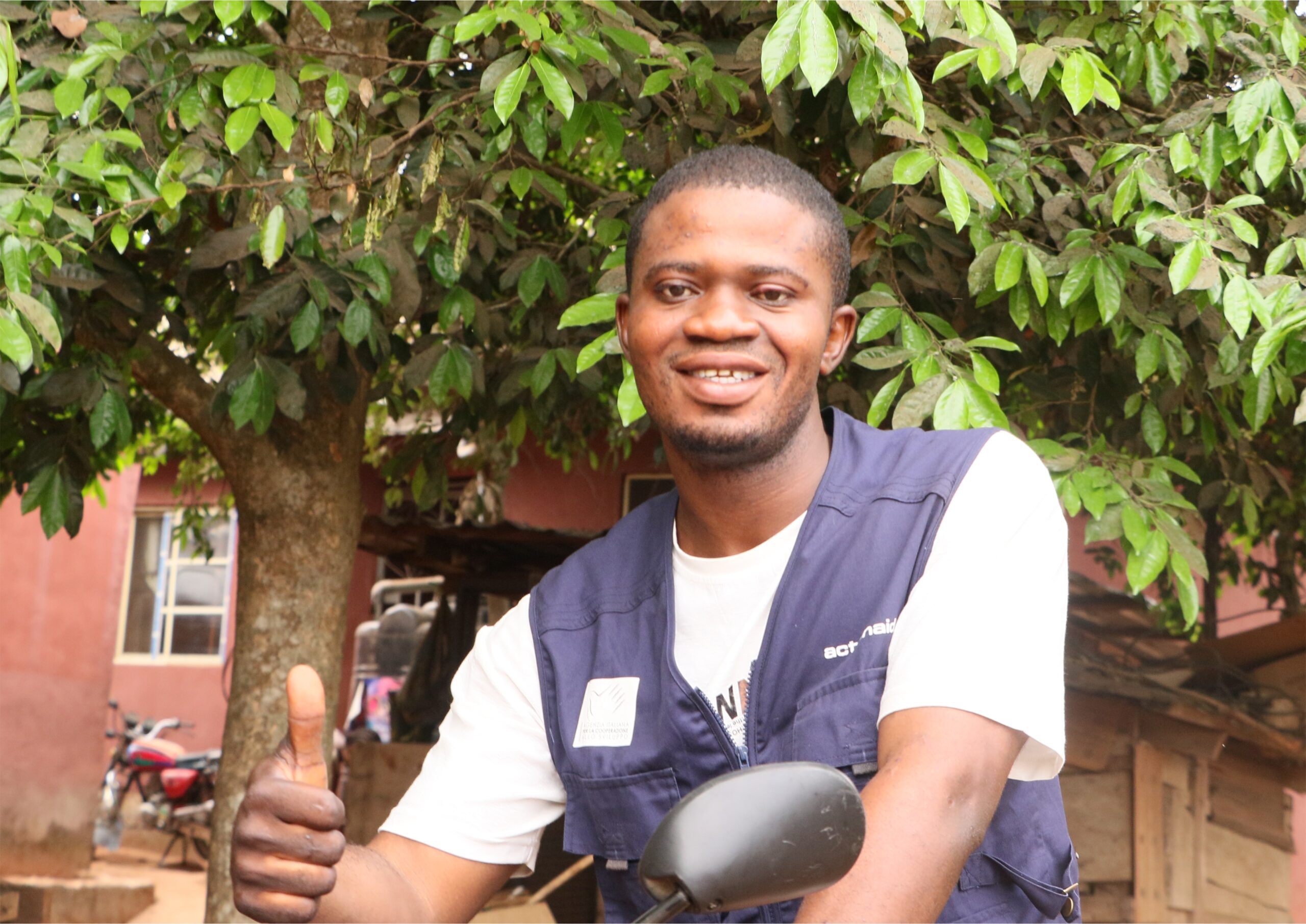
Samuel Oshioke could hardly keep a straight face. In an emotionally laced voice, he tells how the struggles of growing up pitched him toward the desperation to survive by all means. The death of his father left him with a traumatic experience in which time is yet to heal. Holding firm his fist as he tried to still the dropping tears, he took a long pause, shook his head, and then muttered: “I have tried everything to survive”. He shrugged, his eye fixed on the ground as one counting the sand.

Samuel struggled to keep his feet from wobbling, his feeling of pain and frustration can cut through the air; it was real. “I felt neglected after the death of my father, I have to relocate back to the village,” he said at the village he met a friend who introduced him to a “burger” (a burger is a street slang code for traffickers). He was told it will cost one hundred and fifty thousand naira, (150,000) to commence on the journey. Samuel’s immediate challenge was how to convince his mother. “I called my mum and explained to her how we have struggled with poverty all our childhood, she reasoned with me and prayed that I have a successful journey” he said.

As soon as he arrived the border of Niger Republic, he was kidnapped, locked up in an underground cell and tortured with iron rod, cut with knife and often beaten to stupor. One day, he recalled: “I was stabbed with a sharp knife” he pulled the sleeves of his shirt to show the scars.

Samuel was released by his captors after a month of pain and torture, and then he embarked on the journey through the desert to his Libya destination. At Libya, he was again arrested and imprisoned for six months before his release to the International Organization on Migration which deported him to Nigeria.

When Samuel returned to Nigeria, he was down to nothing but a hardened determination to survive. At the point of finding a legitimate source of income, a family friend introduced him to ActionAid’s capacity training for returned and potential irregular migrants “ActionAid have really been a great help for me, the empowerment programme in poultry helped me to refocus and see other things I can do and the counseling also healed me a lot from the trauma I experienced” he insists if he must travel again, it would be through the legal option and never through the land borders.

Continue Reading

DIVERSIFYING FOR GROWTH

Esther Ali took a piercing look at the array of products she made: “I made 14 products that I sell and distribute to hotels and some shops” she boasts, listing the 14 items, which include hand sanitizers, body wash, hair cream, hair conditioning, body lotion, air freshener, lipstick, aftershave for men, etc. Esther never imagined she could quickly make the transition from hawking oranges from street to street to selling her own hand-made products to hotels and having her branded name dot the 14 products.

Esther is easy prey for traffickers in human sex exploitation; she is uneducated, and had no skill but is determined to succeed at any cost.  “My parents did not have much to take care of us as children; I did not go to school, we struggled so much, we can’t even eat well, always suffering,” she said.

Esther had no dream, no aspiration; she just wanted to live a life without the struggles for basic things like clothing and food on her table. The only option was to do menial jobs and hawk oranges when she is not at work. She explained her tough it was to earn eight thousand naira (8,000) after each month of hard work. It was not enough to fulfill her basic need for food and clothing. She needed more. In her search for more, an opportunity to be trained with skill presented itself. It was the first time to acquire any form of skills.

“I wouldn’t have been useful to myself if I didn’t get the opportunity to be trained by ActionAid, I always think what would I be doing now if not for the training” Esther was enrolled in the Cosmetology session of the training for potential migrants in Auchi. She soaked her soul into the training and it showed: “I learnt 12 products during the training and I learnt 2 more products on YouTube” Esther diversified her line of business and quickly gained the interest of small guest houses and neighbourhood supermarkets where she regularly supplies her products.

Continue Reading

EXPANDING IMPACT

The ambiance has the feel of a carefully staged trade exhibition hall; colourful, inspiring, and engaging. Everywhere you turn; the wall bleeds with inspiring inscriptions of courage, guts, hope and faith. The Genius Hub is more than a vocational training centre; it is a place for life’s skills acquisition, a centre where total human development is attained.

Isimene Whyte is full of energy; it is easy to tell how her mind works; the nearly perfect setting and craftily organised setting at the Genius Hub gives a hint of the founder’s vision to empower young people with skills to compete in the marketplace and the emotional balance for right decision making.

The Genius Hub was a creation of necessity; Isimene, an experienced social work expert in International NGOs and government space discovered huge skill gaps among university graduates and the young people she interacted with: “I started a research on how to solve the problem of poverty, in the course of the study I discovered that many young people lacked the ability to manage, they lacked online presence, they lacked self-confidence, had low self-esteem, had no smartphone to boost their businesses” Isimene listed as some of the reasons why the Genius Hub was established.

“Since inception, we have trained about 8,540 young people in 31 skill sets, improving their ability to discover themselves, enhance their chances of employability and entrepreneurship” the Hub’s founder affirms how the centre’s cooperation and collaboration with ActionAid have extended their core mandate of empowering young people with better alternatives to irregular migration. “We got in touch with IDRC (ActionAid local implementing partner in Edo State), we then started the conversation on how to engage with returned irregular migrants and potential migrants. In our centre, providing psychological support is the most important part of our job” she said.

Continue Reading

POSITIONED FOR PROGRESS

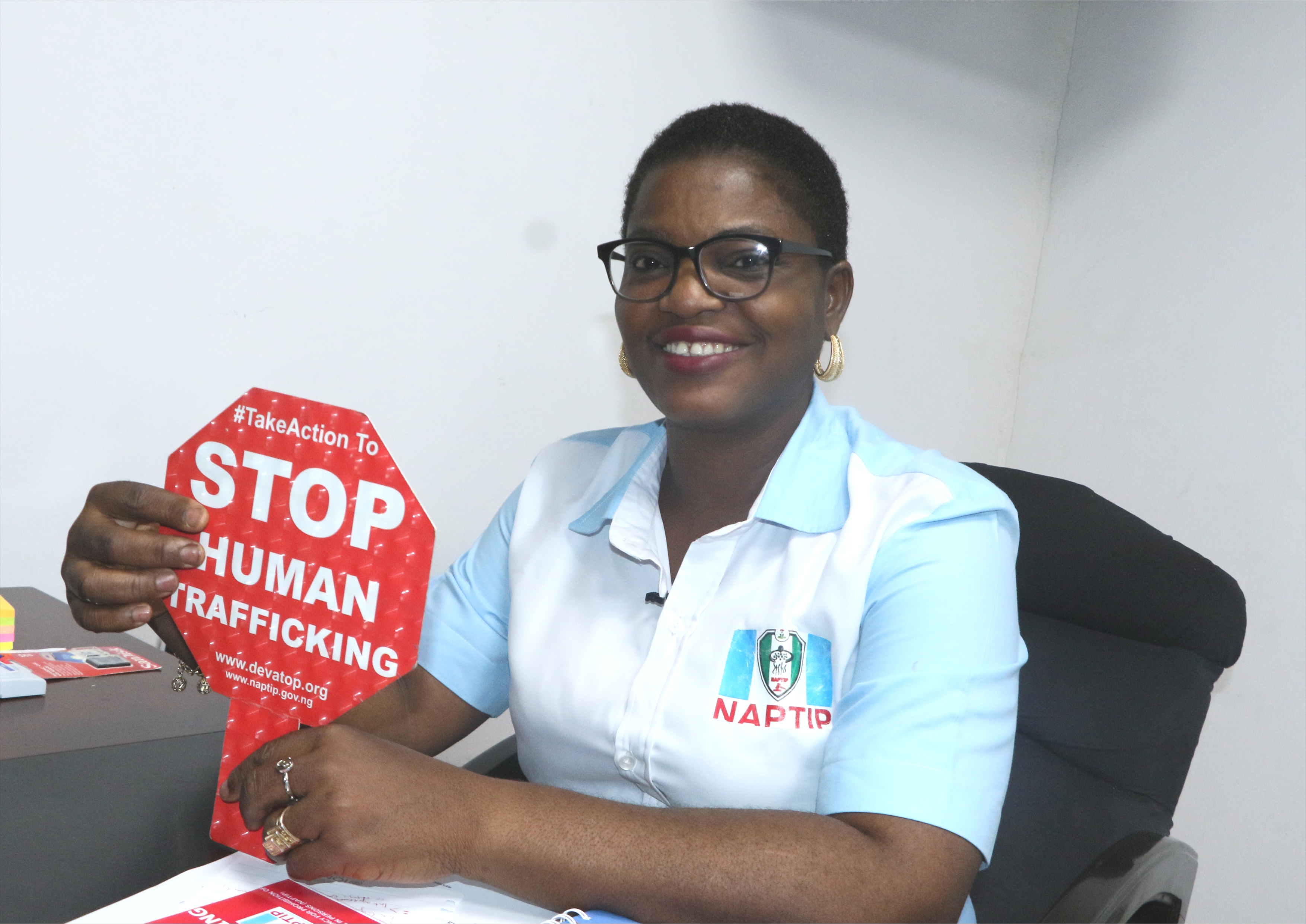
Chidiebere Ifudu is faced with an uneasy task. She and her team are executing a mission to prevent and hunt down perpetrators of human trafficking. Chidiebere is the zonal commander of the National Agency for the Prohibition of Trafficking In Persons, NAPTIP covering Edo and Delta axis.

“The situation of human trafficking as we can see is reducing in Edo State but taking a toll on Delta State, we are even seeing new trends with the cases of ritual adoption and killings” the NAPTIP zonal commander argues that the sustained efforts including the public renouncement of ‘curses’ by the Oba of Benin has emboldened victims to speak out and traffickers to relocate to the fringes of the Delta State borders.

March 9, 2018, His Majesty, the Oba of Benin summoned all the chiefs and native doctors in the Benin Kingdom, it was an emergency meeting, the Oba in response to the increased incidences of human trafficking and irregular migration in the State made a stern proclamation against the perpetrators of human trafficking.

The Oba warned and cursed: “Our gods will destroy you” the angry Monarch lashed on the traffickers.  Chidiebere adduced the Oba’s pronouncement and reversal of curses placed on the victims as one of the reasons for the drop in the incidences of human trafficking in Edo State, but she is worried about the rise in Delta State. She hints at an increase in NAPTIP regional call centre for inquiries at the 24 hours call centre: “We observed that immediately after the pronouncement by the Oba, many victims were emboldened to come out, they spoke out for the first time and the perpetrators shifted to the neighboring State” She said.

“I believe that we need such institutional synergies and co-operations’ like the one by ActionAid’s Dare to Hope project in order to fight this menace that has now become endemic” She insists that: “ActionAid is one of the great partners that we have in Nigeria; since our work with ActionAid, our capacity has been increased, many officers have been trained, we have learned new things from the partnership and our operations have greatly improved,” said the NAPTIP commander.

Continue Reading

#FloodRelief: Spotlight on ActionAid’s Intervention

As the flood washed away the things they held dear and the only place they called home, many ran for their lives, some tried to grab what they could because it is very hard to let go, and some, sadly lost their lives while others remained and watched from their rooftops. ActionAid Nigeria is proudly returning smiles to their faces with the #floodrelief intervention.

Continue Reading

2023: Let’s make impact again together

Dear Esteemed Supporter,

Greetings from ActionAid Nigeria.
Here’s to officially welcoming you to 2023.

Thank you for supporting our mission to end poverty and fight social injustice. In 2022, your gift helped us to save over 6000 lives – including pregnant, nursing mothers, children and women-headed households – who were affected by the unexpected floods across six states in Nigeria.

With donations from people like you, ActionAid – through the Community Sponsorship programme has continued to help women and children in underserved communities for 9 years – THANK YOU!

This year, with your continued support, be assured of our deepened commitment to our relentless fight to end poverty in Nigeria.

Community Sponsorship turns 9!
Please follow all our platforms for details on how you can be involved – Stay Connected!

For sponsorship and inquiries, please feel free to contact us via our email {communitysponsorship.nigeria@actionaid.org) and via Whatsapp:

Wishing you a Happy and Prosperous 2023!
Thank you.

Andrew Mamedu,
Director, Resource Mobilization (ActionAid Nigeria).

Continue Reading
Continue Reading
Continue Reading
Continue Reading

THE LUCKY COMMUNITY

Stretching out for miles without any sign of civilization, in what appears to be a people forgotten by its government; left to fend for themselves, is Panguru.  Panguru is a hard-to-reach community in Billiri Local Government Area of Gombe state. The journey to Panguru in the beginning, seemed like a travel to nowhere. The land is vast, with terrains so rugged, and the ground, partly rocky and stickily muddy at the same time. To traverse this area in the rainy season, they say, is considered an act of bravery. However, ActionAid was not deterred!  

Madam Victoria, as she is popularly called, the community facilitator, Panguru. She shared with so much excitement, how they ended up being a beneficiary community when ActionAid and its partners were rejected from a previous community. “I want to thank these organizations because we have benefitted a lot from them and we count ourselves lucky because the first community they went to, they were rejected, before coming to our community; which that community is now regretting now seeing all that we have gained,” she remarked.  

The presence of ActionAid and its partners in Panguru has empowered the women. This was achieved through capacity-building training. in areas such as education, peaceful co-existence, household education, hygiene, human rights, and sustainable farming. “At the beginning when they came in, they taught us how to set up a cooperative and we came back and informed our community elders and we the women set up the cooperative and decided on a date that we will be meeting and we set up every Sunday. Every Sunday, we meet, deliberate, and teach. There are some books they gave to us and we use these books to teach ourselves; Women that do not know how to read and write, learned something during this period as a result of these organizations” As a result of this, we started taxing ourselves every week and ActionAid and Hope for the Lonely complemented our effort by empowering three women. Some livestock and others, groundnut for vegetable oil making. later, three more people were empowered and we continued growing and investing. They kept inviting us for a series of training in which I cannot count the number of trainings and they continued empowering us” Madam Victoria said. 

To help themselves, “we were rotating the proceeds of the empowerment among ourselves every three months and were contributing money for our organization. We used the proceeds from this to buy a cow for the organization” 

Also, as part of its intervention projects in Panguru, ActionAid built a healthcare facility. This facility, is only one available in the community. Without it the past, they had traveled the unpleasant terrain to get help when the need arose.  

“Hope for the Lonely and ActionAid built a hospital for us in which in the past, we usually carry the sick on our heads to the neighboring towns of Billiri or Kashare even in the rains. But now that we have a hospital, things have improved; There was a time that we took a sick person on the head to go to the hospital and before we even got to the next community, the person died and we started coming back with a dead body. This was in the rain and on the muddy road that sticks up to your elbow, that time, Ponguru was almost like a forest She said. “In the past, sick persons were carried on the head but now, there is an improvement as a result of the hospital” Madam Victoria retells a painful experience. 

Madam Victoria also shared how she was empowered with a cow and how it has impacted her, her family, and her household. “I was empowered with a cow. The cow is helping us. During the farming season, we use the cow to make ridges; we cannot take money to pay for a cow to do that for us because we have ours that we can use. When it is time to sell the cow, we can sell it and use the profit to buy a small one and keep it; all of which is part of the benefit; In the area of my family, when it is time to pay my children’s school fees and I don’t have money, we can use the cow to work on the farm to raise money to pay school fees, buy food and even buy some household items” 


Continue Reading