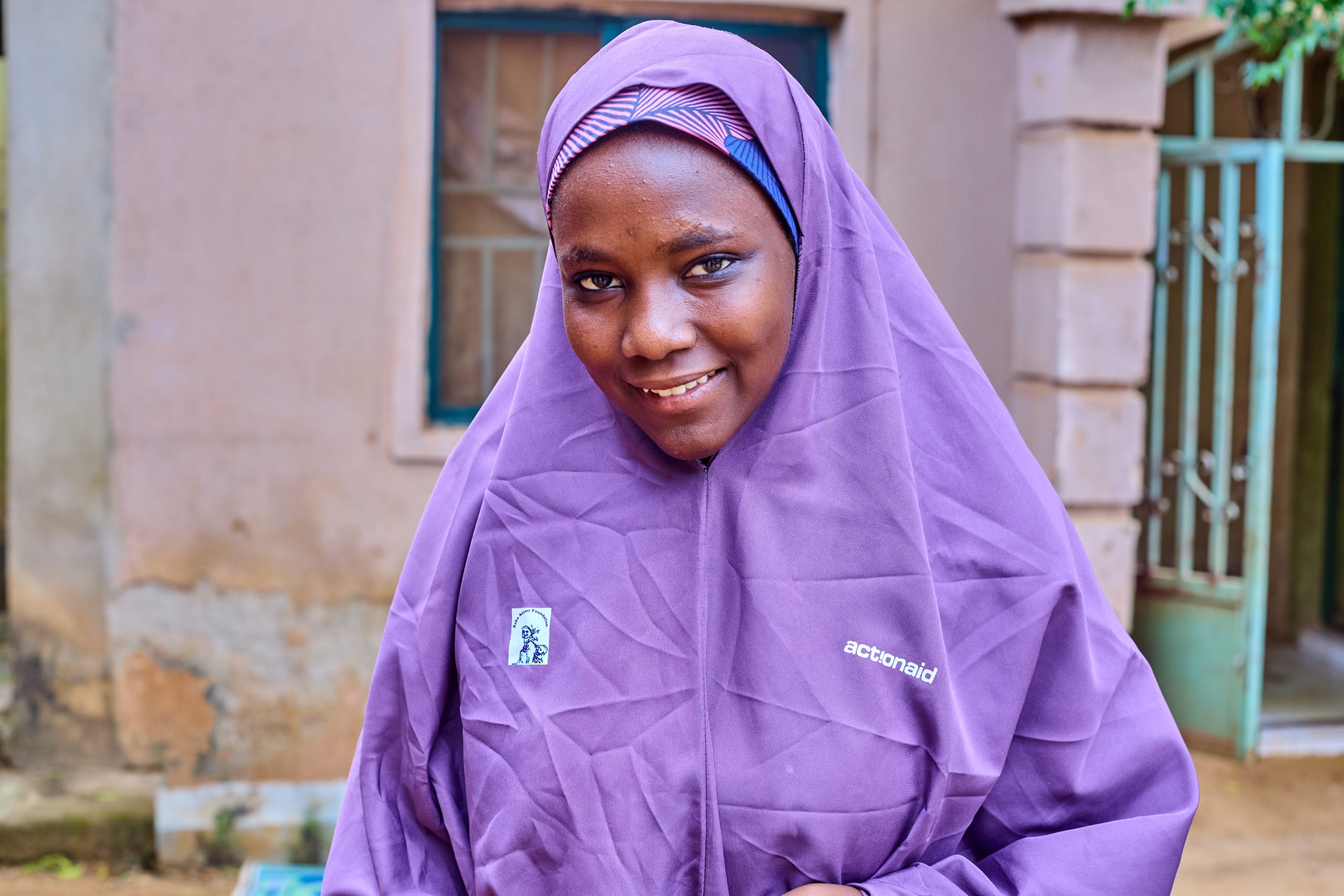
Electricity at last in Raishe! Activistas making strides.

Access to education is a huge challenge at Raishe Community. Children from this farming community are least motivated to attending school. It appears that there is no incentive to attending school. So, when ActionAid through ASURPI, its local partner began to work with the community, it focused on creating incentives that will persuade children to aspire to attend school. A playground was constructed in the only Primary School in the community, being the only playground with facilities, schooling became appealing to children. 

It was time to assist the community to respond to its major challenge – electricity supply: “There was no light in the community, we feel cut off from the rest of the world; we cannot listen to news; I have to travel to another community to listen to news and watch football matches, we cannot iron our cloth, some people don’t have a taste of cold water and drinks” said Sanusi Ahmed. 

Ahmed, 28 is a community youth mobilizer and member of ACTIVISTA; a youth led initiative supported by ActionAid. The group was formed in the community in 2015, with present membership of 25 boys and 15 girls.  

“We decided to take actions to help ourselves because we learnt from ActionAid that it is our responsibility to fight for our right in the community” Ahmed slapped his feet on the sandy floor as he maintained that the group developed a strategy of engaging any politician who visits the community during election. “We know that during election is the best time to catch them (politicians), so when they came to us for vote we gave them a list of what they must do if they want our vote, we asked them to provide a transformer and connect light to our community. We decided we will not vote except they connect us to light, we insisted that there will be no election without electricity supply in our community” Ahmed insists. 

The activism worked, a transformer was delivered and the community was connected to electricity supply. Ahmed said businesses have improved in the community: “Our young boys opened barbing salons and the women sell iced block and cold drinks”. 

Continue Reading

ActionAid builds a school in Ovuoba community 


Ovuoba qualifies for a hard-to-reach community. The road is long, bumpy, and dusty. Ovuoba is about 2 hours drive from the State capital – Abakaliki; it is far-flung from the infrastructure which dots the State capital; not even the crumbs of infrastructure can be seen in this community. At a time, there were no health centres, no pipe-borne or borehole water, no electricity supply, no educational institutions, and no presence of government is visible in terms of basic infrastructure. 

Veronica Nwamba, 30 is a teaching staff of Ovuoba Okpitumo Ndiegu Community Primary School, the only school in the community built by ActionAid. Veronica never had the privilege of attending Primary School in her community: “It was a very difficult journey going to school every day. I and my sibling will have to go to school in another community very far from this community, my mother will tell me to go to school for only 2 days in a week and rest at home for 3 days, I had to rest from the long journey to school” Veronica recounts. 

Before ActionAid built the first Primary School in Ovuoba, the community had a makeshift School, where children who could not bear the long tortuous trek to the neighbouring School learn under a tree shelter. It was an informal system just to keep the children busy, while most of the children in the community meander during School hours, some help their parents in the farm, some sell petty goods around the neighbourhood. “Before ActionAid and PDA gave us this school, many children could not attend School, many of them stay at home; especially the girls; we had reports of many teenage girls getting pregnant” Veronica hints.  

In response to the need for educational facility, ActionAid constructed 4 blocks of classes, with a staff office on a land donated by the community. The School accommodates about 330 pupils. 

Veronica recall: “When ActionAid and PDA came to our community, they had a meeting with some of the community people, I was young at that time, they asked us what we wanted, we made a list of many things; water, electricity, school, support for women and other things, but we agreed among us that the most important need of the community is School, so they built this School. I can tell you that because of this School that has been brought close to us, many people would have remained illiterates; without this School I don’t know where my children will be going to School”. 


Continue Reading

Water in Ovuoba at last!

Continue Reading

ActionAid empowers Ephuenyim women group

For more than 3years, Uzoamaka Nwamba, 35, worked her fingers to the bone; tilling the soil, weeding grasses and harvesting crops. Uzoamaka resumed to the farm by 6a.m and completes her daily task by 6p.m. She earned 300 Naira daily after the laborious work in the farm. Her choices were limited; with 6 children to care for and many basic household needs to meet, she had to labour in order to attempt minimal survival.  

While Uzoamaka busied herself in the farm, certain group of women in Ephuenyim community gathers for peer education meeting, where they learn from the content of the Peer Education Manual produced by ActionAid. 

One day, she was invited into the group. That invitation changed her perspectives in many ways. It was at the meeting that she learnt about a loan scheme by the women cooperative. The Ephuenyim community women are beneficiaries of the LRP women empowerment scheme. They acquired canopy, chairs, tables and other essential items for event management and rental services. 

Quickly, Uzoamaka applied to be considered for a loan; she received 20,000 approved as loan. The day after her loan approval, she hurriedly made her way to market, bought palm kernel, a huge bunch of plantain and began her first business. “I made profit from the first business; I will save it and go back to the market to buy more. That was how I was selling and saving the money for one year. Then I returned it, collected another loan and started doing business with the profit I made” said Uzoamaka. 

“I make like 4,000 Naira as profit from my business on market days, sometimes I make 2,000 Naira every day” Uzoamaka said her household nutrition has improved and her children are back to school: “I have small money now, to take care of myself and my children. Before; my children only eat once in a day, they wear dirty clothe, even myself I will wash and wear the same clothe to the farm when I get home and waits for it to dry so I can use it the next day. I can change clothe now and feed my children well”. 

Continue Reading

EMBOLDENED ACTIONS

When a family have only girl children in Ephuenyim community; they say – ‘the girls are for sale’. Ukpa Ada breaks the silence on the perception of the girl child in the community. “Before ActionAid and PDA came into our community, we were in the dark. When they came to our community, they opened our eyes to many things that are wrong, for example before, if a woman have many girl children without boys, they say, we sell girls” she paused, thought through what she had revealed, then said more: “Women were not allowed to speak in public”.  

Ada is the chairlady of the Ephuenyim Community Women Association, a meeting of community women established through the assistance of ActionAid and PDA. At the meeting, the women are thought the content of the Peer Education Manual. Ada insists that since the woman began to participate in the Peer Education group, they have become literarily transformed. “Many things have changed sincerely, we have learnt so much and it has improved our lives as women. Many of the women before don’t know about nutrition, they don’t even know much about cleanliness of themselves and their environment, some don’t know the value of education but now I can tell you that things have changed. She said of her children: “What I do for the boys, I do for the girls. I am preparing one of my girls for the University”.  

Ukamaka Nwamba is Vice Chairlady of the women group. Ukamaka tells the gory stories of how the girl children suffer from the impact of Female Genital Mutilation, which once thrived in the community. “I remember the incidence of a 13 years old girl that bled to death because of this Female Genital Mutilation. The issue of Female Genital Mutilation was very popular here, they stigmatise the family that does that bring out their girls for the ceremony. It was seen as a thing of the pride of a woman. But when ActionAid and PDA began to teach us on the dangers of the practice, and we ourselves experience it, we see how many children bleed and the pain they go through, we became determined to end the practice. Now, no more Female Genital Mutilation in our community. Anybody found doing it is reported to the head of the community” said Ukamaka. 

Continue Reading

MARRIED FOR FOOD

Celestina Uguru was 13 when she was given out in marriage. It was not a decision taken with her consent. Celestina had just returned from farm one evening; tired, hungry and exhausted from farm gleaning; as she prepared to take a rest for the day, her father called to inform her that she would be married the next day.  

“When my father told me that I will marry, I was thinking of running away from the house that night, then my father told me that he cannot feed me again and that getting married was the best thing for me so that I can have someone that can be feeding me” she looked intensely on her sun beaten skin and whispered aloud: “my father pushed me into marriage because there is no food”. Fearful and unable to resist the marriage proposition, she was married to a man in his 40s. 

Celestina became a young wife when she should be in school, she recounts the serial abuses, denials, regrets and frustration she experienced: “As a young wife, my experience was very bad, even my husband does not work, I will be the one to go to farm, cook the food, and fetch water and he will still beat me. One day he beat me to the point that I was almost blind” she struggled to narrate the painful ordeal.  

The young mother had already adjusted to the abuse: “I was already used to the marriage because of my 6 children, I don’t want them to suffer, I want them to go to school, I don’t want them to suffer and not go to school, so I decided to stay in the marriage and work so that I can send my children to school”. 

When Celestina joined the Women Peer Education group in the community, her life took a new turn: “It was when I joined the women group that I learned a lot of things, my attitude changed, I respect people now, I use to be a troublesome woman before, I also learned about nutrition; I don’t know that you have to use salt to wash vegetables before cooking, I didn’t know I have to wash my hands before cooking, my hygiene has also improved” she said. 

Celestina is an elected women leader of a political party in her community; she is first in her family to hold an elected political position: “If ActionAid and PDA didn’t come to our community, I will still be in deep darkness, I will not know anything.  If ActionAid didn’t come, my husband will still be beating me, I would not have been able to build a house, train my children, I would just have been at home without participating in politics” she said. 

Continue Reading

Emboldened for Action

Continue Reading

Challenging The Norm, Advancing Women’s Rights

Ugbedomagwu community is locked in the woods. The dusty stretch of its bumpy road earned the land the tag- “hard to reach community.” This community is cut off from the world of civilization; it lacked everything but nature’s gift of soil and sunlight; to grow food and to keep the land warm. These gifts of nature only reminded the people that they were still in existence. 

When ActionAid’s LRP made an inroad into the community, it was not the kind of visit they were used to; they only saw politicians once every 4 years during political campaigns. “Through the LRP, we were seriously enlightened and empowered to speak up” Hauwa Salami said. Indeed, the women of Ugbedomagwu had lost their voices to the entrenched culture of ‘women-silence’. “Women were not allowed to join in community meetings when the men gathered to make decisions. We only hear of the outcome of their decisions and have to obey”. She recalled how women made no contributions to decisions on domestic or communal matters. 

The people’s burgeoning needs of lack of water borehole, poor telephone network, the need for health centres, electricity, need for primary school have been addressed through advocacy efforts led by the community members. 

Looking in her late 40s, Hauwa noted how startled she and other members of the community were when ActionAid informed them that they also have the power to change the situation of their community through engaging the government. Hauwa said: “ActionAid built our primary school and trained us to engage with the government through advocacy and demand for other needs of the community. We did the advocacy and we got government to sink  a borehole, another advocacy is ongoing for more teachers in our school” she noted. 

One of the most outstanding accomplishments in the community is the closure of the gender inequality gap. Hauwa succinctly captured the situation: “Before ActionAid came here, our women cannot join meetings, women were not part of decision making, women were just supposed to have children, cook for their family, but were not empowered to voice their own opinion.”    

Hauwa made bold to assert the confidence and equality the women of the community now share with the men. “Many things have changed since our engagement with the LRP, one of such things that changed after we learnt about para-legal is the reduction of the time women spend in mourning their late husbands, it used to be 9 months of ‘imprisonment’, apart from being locked up in a room, women were asked to bring 20 tubers of yam, a big goat and other things but through our advocacy and demands, the traditional leader considered the review of the custom, all those demands have been dropped and the 9-month mourning period has been reduced to 3 months without the requirement to offer goats and tubers of yam” she affirms. 

Learning from the model of Ugbedomagwu, other adjoining communities – Offukpe, Ajodagnu, Idah, and Ejule have also been influenced to reduce the mourning period as well as scrapping the bogus requirements from women who are mourning their late husbands. 

Continue Reading

Challenging The Norm, Advancing Women’s Rights

Ugbedomagwu community is locked in the woods. The dusty stretch of its bumpy road earned the land the tag- “hard to reach community.” This community is cut off from the world of civilization; it lacked everything but nature’s gift of soil and sunlight; to grow food and to keep the land warm. These gifts of nature only reminded the people that they were still in existence. 

When ActionAid’s LRP made an inroad into the community, it was not the kind of visit they were used to; they only saw politicians once every 4 years during political campaigns. “Through the LRP, we were seriously enlightened and empowered to speak up” Hauwa Salami said. Indeed, the women of Ugbedomagwu had lost their voices to the entrenched culture of ‘women-silence’. “Women were not allowed to join in community meetings when the men gathered to make decisions. We only hear of the outcome of their decisions and have to obey”. She recalled how women made no contributions to decisions on domestic or communal matters. 

The people’s burgeoning needs of lack of water borehole, poor telephone network, the need for health centres, electricity, need for primary school have been addressed through advocacy efforts led by the community members. 

Looking in her late 40s, Hauwa noted how startled she and other members of the community were when ActionAid informed them that they also have the power to change the situation of their community through engaging the government. Hauwa said: “ActionAid built our primary school and trained us to engage with the government through advocacy and demand for other needs of the community. We did the advocacy and we got government to sink  a borehole, another advocacy is ongoing for more teachers in our school” she noted. 

One of the most outstanding accomplishments in the community is the closure of the gender inequality gap. Hauwa succinctly captured the situation: “Before ActionAid came here, our women cannot join meetings, women were not part of decision making, women were just supposed to have children, cook for their family, but were not empowered to voice their own opinion.”    

Hauwa made bold to assert the confidence and equality the women of the community now share with the men. “Many things have changed since our engagement with the LRP, one of such things that changed after we learnt about para-legal is the reduction of the time women spend in mourning their late husbands, it used to be 9 months of ‘imprisonment’, apart from being locked up in a room, women were asked to bring 20 tubers of yam, a big goat and other things but through our advocacy and demands, the traditional leader considered the review of the custom, all those demands have been dropped and the 9-month mourning period has been reduced to 3 months without the requirement to offer goats and tubers of yam” she affirms. 

Learning from the model of Ugbedomagwu, other adjoining communities – Offukpe, Ajodagnu, Idah, and Ejule have also been influenced to reduce the mourning period as well as scrapping the bogus requirements from women who are mourning their late husbands. 

Continue Reading

Connecting the Dots, Fostering Collaboration.

Continue Reading