Activism for Development

Continue Reading

Osaragada: Emerging Breed of Male Champions for Women’s Rights

Anase Mommoh’s story could pass for a Nollywood fable. It is a tale of a vulnerable woman who refused to allow her situation of extreme poverty defy her courage to work towards a better life. Anase meandered her way into Osaragada community with nothing but a dusty thick polythene bag containing assortments of her belonging. She knew no one in the community; she had moved from a neighbouring community just to seek refuge in a land she knew no one. No one could take the risk of accommodating a stranger but Sadiku Otaru, 74, the ward head of the community who took the chance.   

Otaru is a jolly good man; never struggles to display his contagious loud laughter. He motioned how he easily would have offered to marry Anase who was at the time vulnerable. But no, he recalled how ActionAid through the LRP trained him on gender equality – respecting the rights of male and female: “If not for ActionAid, I would have thought of marrying her (Anase). We were marrying vulnerable women before, but I decided to protect her when she told me her story”. Otaru insists that the LRP poked at their manly ego, but it was for the good of the community: “ActionAid made us to understand the power of women in the community. At first, we (men) were very angry at ActionAid for telling us about gender equality, and they told us not to enslave our wives.” Otaru quickly noted: “As Mary Slessor stopped the killing of twins, ActionAid stopped the maltreatment of women in this community,” he affirms. 

Women made little contribution to the community power structure in Osaragada. It was a male-controlled community. That is no longer the case as women now exercise their rights to participate in community meetings and make important decisions like the men. 

Anase lived with Otaru’s family with her two children for 5 years, working as a farmer on the piece of land in the community. She practised subsistence farming just to feed her children and add to her host’s barn of food. She narrated how she was selected to attend the LRP training on Agro ecology: “I learnt a lot during the training, I learnt about how to space my crops, how to make manure, we were taught so many things I never knew before.” She quips. 

The outcome was dramatic; Anase moved from subsistence farming to commercializing her yield. She sold some and kept some for food. Anase made just enough money to build her own 2-bedroom house on a plot of land donated by the community chief, where she now lives with her son. 

Continue Reading

Better Performance, Better Yields

Continue Reading

#FloodRelief: Spotlight on ActionAid’s Intervention

As the flood washed away the things they held dear and the only place they called home, many ran for their lives, some tried to grab what they could because it is very hard to let go, and some, sadly lost their lives while others remained and watched from their rooftops. ActionAid Nigeria is proudly returning smiles to their faces with the #floodrelief intervention.

Continue Reading

ActionAid Built Our Only School

Hakimawa is an agrarian community. It is a community in slow transition to modern times. Like many communities, the houses are muddy, the children run around the heap of sandy surrounding with no clothes on. In Hakimawa, the people live, just to survive the next day.  

Sprawling in population but stunted in progress, Hakimawa grew from 47 household in the early 1990s to 199 households at the moment. The headcount of adults above 18 are 510; the children are more in number: “children could be more because an average household have about 11 children” Hakimi Salihu Hakimawa, the Village head struggled to recount.  

This community is lacking in every basic infrastructure, it has no health facility; the women give birth at home and the sick are treated with local herbs. It had no school until ActionAid built the only primary school in the community. 

“When they (ActionAid and ASURPI team) visited us, we thought they were from the government, we were so happy because government people don’t come to our community, we see them just once or twice every four years. They (ActionAid and ASURPI team) asked us what our priority need is, we told them we need everything because there was nothing- no water, no electricity, no school, and no health centre but after discussing with my people, we decided to ask for education, we told them to build a school so that our children can get education. If we get education, we can get every other thing” the Village head said. 

In 2010 ActionAid built the first school in the community. The excitement of having its first educational facility was ecstatic; the Village head instructed each household to send their children to school. The following day of the school opening; 107 pupils turned out. The pupils outnumbered the size of the school and the volunteer teachers at the time but they were glad they had a school to attend. 

“When we saw that the population of the school is growing so much and there were not enough teachers who were qualified, we went to the government, we visited the Education Secretary, he promised to send teachers to the school and he did what he promised, he sent 8 teachers. We are only waiting for the government to add more schools to what ActionAid has already done” said the Village head. 


Helping Gunguntagwaye access quality health care 

Sajida Bashiru, 4 lay weak on the floor; her mother Amina, rested the child on the floor just to adjust her dropping wrapper. Sajida was rushed to the health centre on a motorbike; “she has malaria” Amina whispered to the waiting arms of the nurse on duty, they both hurried into an open office. In less than 15minutes Sajida walked out of the room with Amina wearing a wide smile. 

“People can die of simple malaria if they don’t have a clinic to attend” said Karima Aliyu. Karima is the women leader of Gungun Tagwaye Community.  

“Women have really suffered during pregnancy because of the lack of good health centre in the community, the former place we used as health centre was very small and people are not always going there because you cannot get medicine and sometimes nobody to attend to you” Karima recall how the community lost a pregnant mother and child from stress of travelling to a neighbouring community: “I remember we lost a woman and her unborn child because they have to travel on bad road to the nearby hospital to deliver her baby, the baby and the mother died” she sadly recounts.  

The government replaced the old rusty mud health centre built by the community to a better structure but abandoned it after commissioning. The structure was unused because of lack of personnel and medication. In 2013 after request from the community, ActionAid renovated the structure, equipped the facility and also empowered community members with advocacy skills to get government attention.  

“After ActionAid did the renovation of the Clinic, they also bought beds and provided medicine, then they enlightened us that we can use advocacy to bring government into our community, we decided to write and visit the General Hospital, we requested for more nurses especially female nurses which they gave us five female nurses” the women leader said through an interpreter.

Continue Reading

ActionAid provides Rice Milling Factory for Gida Agoda Community

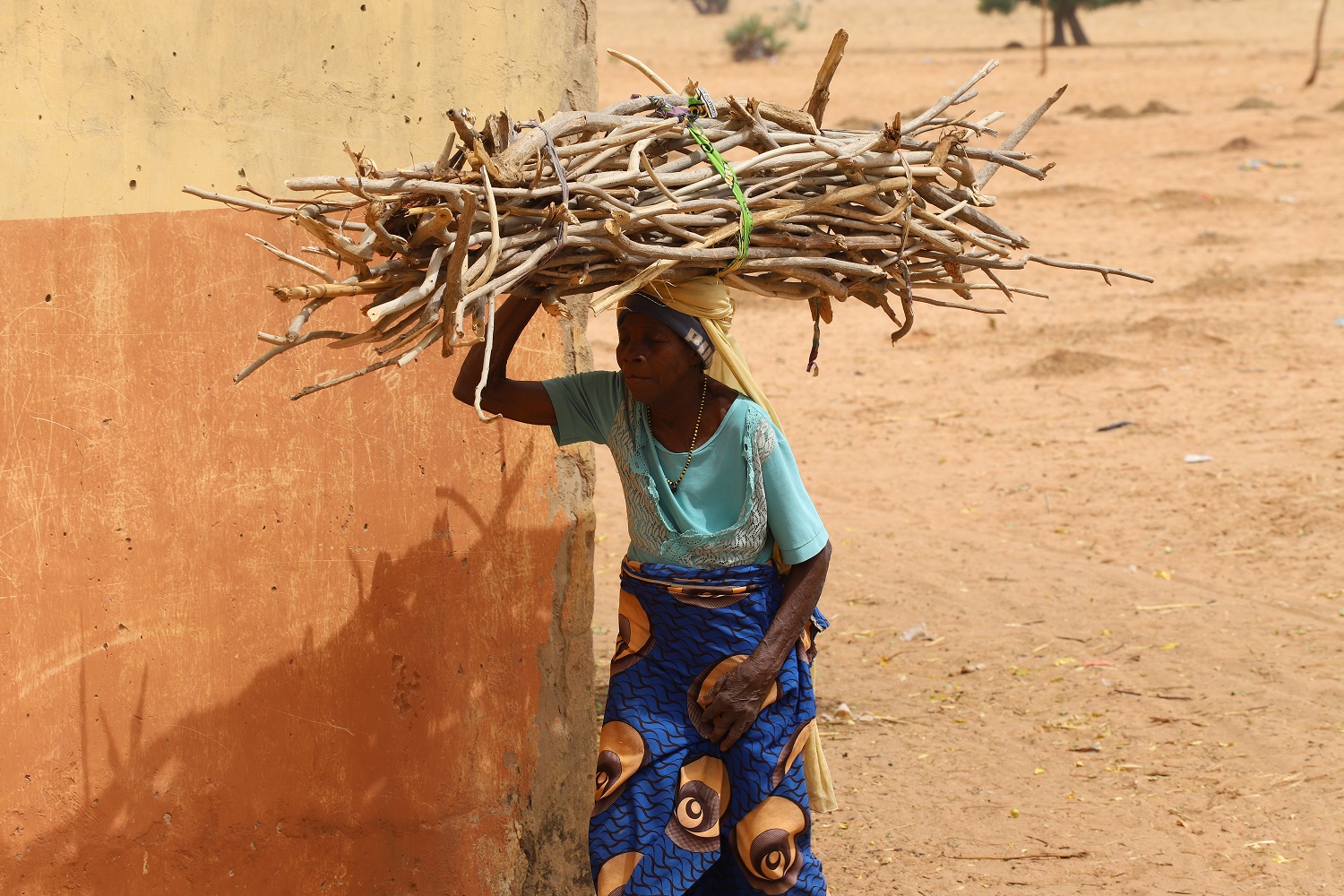
Women in Gidan Agoda community had their role clearly spelt – Take care of the needs of their spouses, fetch firewood, make the meal, and give birth to more children. The husbands, mostly peasant farmers and petty traders were the sole providers for the household. This has continued as a tradition, leaving women as absolute dependent. The consequences are obvious; women become victims of domestic violence, social disconnection, and economic exclusion.  

Wasila Hamisu, 29 recall times when women in the community rarely contribute to the economy or the leadership of the community: “Before ActionAid and ASURPI came into our community, women were left behind, we were not trading, we were not doing any business, the men beat their wives, women were not regarded much, some people think women are not suppose to have education, we were just good as house wives” Wasila recalled. 

Today in Gidan Agoda, women are participants and contributors to the economy of their households and the community. “When ActionAid and ASURPI came to our community, they asked us (the women group) what we want, we told them we want to be empowered with skills so that we can farm rice” Wasila affirmed the wish was granted: “we were given milling machine”. 

The women were formed into a registered cooperative and linked to the Small Medium Enterprises Development Agency of Nigeria (SMEDAN). The 50 women members of the group were trained on improving their agricultural yield and sustaining their business, they were then supported with the sum of 3 Million Naira as interest free loan of 24months for which only 70 percent was required to be paid. 

The cooperative is making profits and increasing their outputs. It has increased rice production by about 60 percent, making about 30 percent in profit. 

The increased economic activities of the women restored their self confidence and improved their relationships with their spouses. “Before I couldn’t look at people’s face when talking to them, I can’t interact well but now I can talk freely in public and express my mind. I never believed that in my entire life I will ever be able to travel by air and sleep in good hotel but I enjoyed all these because of ActionAid” Wasila said in an emotionally laden voice. 

Continue Reading

Helping Gunguntagwaye access quality health care

Sajida Bashiru, 4 lay weak on the floor; her mother Amina, rested the child on the floor just to adjust her dropping wrapper. Sajida was rushed to the health centre on a motorbike; “she has malaria” Amina whispered to the waiting arms of the nurse on duty, they both hurried into an open office. In less than 15minutes Sajida walked out of the room with Amina wearing a wide smile. 

“People can die of simple malaria if they don’t have a clinic to attend” said Karima Aliyu. Karima is the women leader of Gungun Tagwaye Community.  

“Women have really suffered during pregnancy because of the lack of good health centre in the community, the former place we used as health centre was very small and people are not always going there because you cannot get medicine and sometimes nobody to attend to you” Karima recall how the community lost a pregnant mother and child from stress of travelling to a neighbouring community: “I remember we lost a woman and her unborn child because they have to travel on bad road to the nearby hospital to deliver her baby, the baby and the mother died” she sadly recounts.  

The government replaced the old rusty mud health centre built by the community to a better structure but abandoned it after commissioning. The structure was unused because of lack of personnel and medication. In 2013 after request from the community, ActionAid renovated the structure, equipped the facility and also empowered community members with advocacy skills to get government attention.  

“After ActionAid did the renovation of the Clinic, they also bought beds and provided medicine, then they enlightened us that we can use advocacy to bring government into our community, we decided to write and visit the General Hospital, we requested for more nurses especially female nurses which they gave us five female nurses” the women leader said through an interpreter. 

Continue Reading

Dinkiri Girls are back in School

Sabongari Dinkiri is a small but fast growing community in Kebbi State; the houses are muddy and far-flung from the other. It is predominantly a farming community of an estimated 900 inhabitants.

It is Tuesday, 10:15am; a school day and time, but children are seen cladding unto plastic plates, briskly walking in groups. “It is worse than this before” said Umar Muhammed when asked why some children were not seen in school.

“Before 2009, you will not find too many girls attending school because we don’t see the need for it. The boys can be enrolled into school while the girls follow their parents to the farm, they fetch firewood, take food to their parents in the farm and do house chores” Umar explained, noting that: “Dinkiri community has been in existence for more than 100 years; no girl has ever proceeded to Secondary School” he said.

Habiba Umar, Muhammed’s daughter grew up thinking that schooling was not a necessity; she loves to go to the farms in company of other girls of her age. At the farms they pick up residue of harvested crops and go home to help their mothers with house chore. This was a daily routine.

“In 2019, ActionAid and ASURPI came to our community with plenty school materials, they brought school sanders, books, bags and other writing material, they even gave our women 5,000 Naira each so that they can trade and to support our girls in school. This greatly motivated us to begin to take our girls to school. Before ActionAid coming into our community, girls don’t go to school in our community” Muhammed asserts.

Motivated by the gifts of school materials, Habiba and other 8 girls began to attend school more regularly. The new school clothes and sanders was a big motivator. “I was very happy when I received the gifts from ActionAid; it makes me look forward to attending school every day” Habiba said.

Habiba is excited that she will be advancing from Junior Secondary School to Senior Secondary School. “We don’t have so many girls completing Junior Secondary School, even the boys don’t continue after Primary School because we have only one Primary School and the Secondary School is in another community, so I am happy that my daughter and some other girls from the community will be going to Senior Secondary. I will do everything I can to support her” Umar assured.

Continue Reading

“Even now I don’t want to marry him until I finish university and if he doesn’t want to wait, he should marry someone else,”

Nafia Garba, 18, is in her final year at Government Day Secondary School, Warrah, but she would not be if not for the intervention of ActionAid’s youth Activist – the Activistas. In her community girls were usually married off once they completed primary or junior secondary school, but Nafisa’s parents wanted her to finish her schooling first. However, her father’s elder brother disagreed and arranged for her to wed a young man in a nearby village. Nafisa was forced to drop out of school for a year selling pastries and wrappers while the arrangements were being made. When the news reached her fellow Activistas, they worked to intervene, but it wasn’t easy.

“In this community, when a girl is getting married it is not her biological father that gives her hand, it is his elder brother,” Nafisa explained. “So they had to convince him because it didn’t want it to be that my father had given his daughter in marriage and now didn’t want him to give me out.”

The group rallied members of Nafisa’s family – including her parents, her father’s younger brother and her mother’s older sister – as well as the village elders to plead her case. Eventually, her uncle relented and allowed her to stay in school. Though she is still pledged to be married, Nafia feels confident that her education will not be disrupted again.

“Even now I don’t want to marry him until I finish university and if he doesn’t want to wait, he should marry someone else,” she said.

Continue Reading

“Because I didn’t go to school, I feel I can’t speak out boldly, but my daughters are more experienced and more intelligent,”

40-year-old farmer from Obegu-Odada community in Ebonyi state, Nnenna Nwakriko, is the third wife of a local farmer. Nnenna’s husband had left the responsibility for the education of her daughters solely to her. However, she was unable to cope with the burden. After her eldest daughter finished primary school Nnenna sent her to Abakiliki to live with relatives and learn a trade while her other two daughters dropped out for two years.

“During the training by ActionAid’s education team I was told to bring her back and send her to school,” said Nnenna, speaking through a translator. “They said that if a girl child is educated they can become nurses, or even work in government.”

Nnenna sold all her assets – her chickens, goats and farm proceeds – and began growing cassava in her backyard. Through the financial management skills she learned from her group leader, she has since been able to send her three girls to school and keep them there. She has even been able to build her own house for herself and her children within the family compound.

“Because I didn’t go to school, I feel I can’t speak out boldly, but my daughters are more experienced and more intelligent,” she said proudly. “I have always known that they will be better than me.”

Continue Reading
  • 1
  • 2